
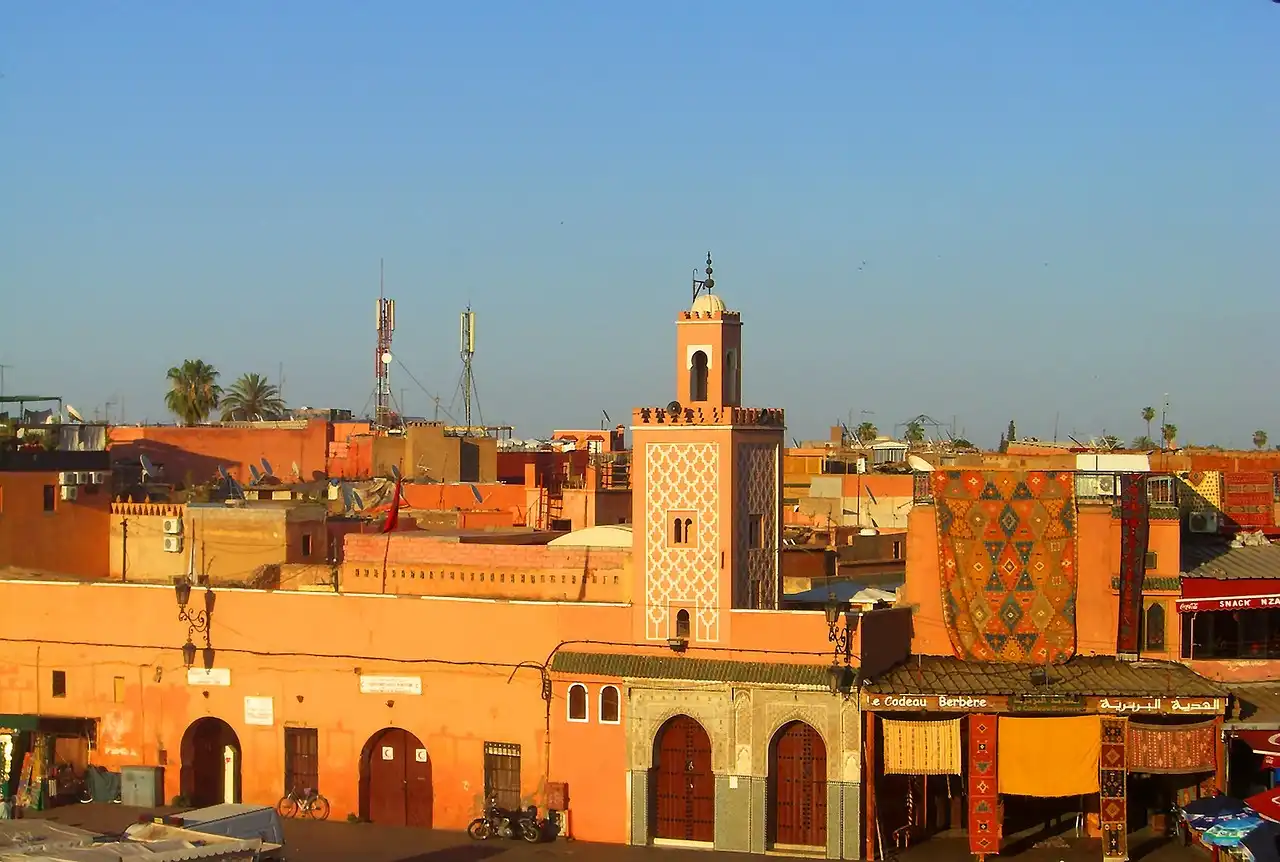
Marrakech is not a city you tick off a list — it is a city you let happen to you. In one afternoon you can drink mint tea in a 12th-century courtyard, lose yourself in a thousand-year-old market, and watch the sky turn copper over the Atlas Mountains from a rooftop. I grew up in these mountains and have lived in and around the Red City for years. This is the guide I give my own friends: the 25 experiences worth your time, when to do them, what they really cost, and the small local tricks that turn a good trip into the one you keep talking about.
The quick answer
If you only do five things in Marrakech: stand in Jemaa el-Fnaa at dusk, wander the souks with no plan, visit Bahia Palace and the Saadian Tombs early, cool down inside the cobalt-blue Majorelle Garden, and take one day trip — the Agafay desert for sunset or the Atlas Mountains for fresh air. Give the city three days and you will see it properly without rushing.
Marrakech at a glance
Do the monuments and gardens at 9 AM, before the tour buses and the heat. Surrender the hot afternoon to a shaded café, the covered souks or a hammam. Then come back to Jemaa el-Fnaa at sunset. Marrakech is a morning-and-evening city — fight that rhythm and you will just feel hot and hassled.
Marrakech was founded in 1070 by the Almoravids, and for nearly a thousand years it has been a meeting point of Berber, Arab, Saharan and Andalusian worlds. That history is not in a museum here — it is in the lanes, the trades, the food and the call to prayer that drifts over the rooftops five times a day. The city splits roughly into two halves: the walled medina, the old red-walled town where almost everything historic lives, and Gueliz (the Ville Nouvelle), the early-20th-century new town with wide boulevards, galleries and cafés. Most of this guide happens inside the medina, within walking distance of the great square.
Why the "Red City"?
Marrakech is nicknamed the Red City because its medina ramparts and old buildings are built from pisé — rammed local earth rich in iron oxide. The warm terracotta colour is protected by local building rules, which is why even modern shops in the old town glow the same shade at sunset.
Historic Marrakech
The medina is an open-air museum of Almohad, Saadian and Alaouite Morocco. These six sites are the backbone of any first visit — and clustered close enough that you can link several on foot in a morning.
1.Jemaa el-Fnaa Square
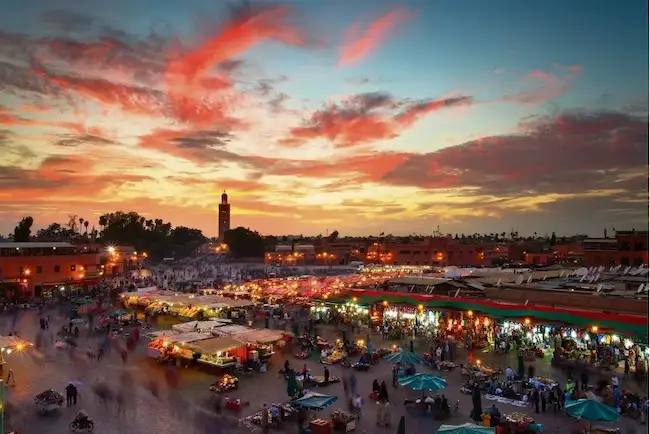
This is the soul of Marrakech and a UNESCO "Masterpiece of Oral Heritage." By day it is a wide, sun-baked plaza of fresh orange-juice carts, henna artists, water-sellers in fringed hats and snake charmers. But the square transforms at dusk: dozens of food stalls fire up under a haze of grill smoke, Gnaoua musicians set up circles, storytellers (the halaïqa) draw crowds in Darija, and the whole place becomes a swirling, slightly chaotic open-air theatre. Climb to a café terrace on the edge for a drink and watch it ignite as the Koutoubia minaret lights up behind it. It is free, it is overwhelming, and it is the single most Marrakech thing you can do.
- LocationHeart of the medina
- PriceFree (food ~40–80 MAD)
- Duration1–2 hours, any time
- Best timeSunset, 6–8 PM
- Best forEveryone
Local tip: Anyone who puts a monkey on your shoulder, draws henna on your hand or "lets" you hold a snake will want 50–200 MAD afterwards. It is fine if you want the photo — just agree the price first and keep small notes ready. Eat at the busy stalls where locals queue, not the ones whose touts are loudest.
2.Koutoubia Mosque
The 12th-century Koutoubia is Marrakech's largest mosque and its compass point — its 77-metre sandstone minaret is visible from almost everywhere, and by city law no building in the medina may rise higher. The proportions of the tower became the template for the Giralda in Seville and the Hassan Tower in Rabat. Non-Muslims cannot enter, but you do not need to: the rose gardens and olive-shaded paths around it are lovely for a slow walk, and the minaret is at its most photogenic just after sunset when it is floodlit against a deep-blue sky.
- Location5-min walk from Jemaa el-Fnaa
- PriceFree (exterior only)
- Duration20–30 minutes
- Best timeDusk for photos
- Best forPhotographers, walkers
Local tip: The garden on the south side of the minaret, towards the Cyber Park, is where locals sit at golden hour. Far fewer tourists, and the light hits the tower beautifully from there.
3.Bahia Palace
If you visit one palace, make it Bahia. Built in the late 19th century for the grand vizier Si Moussa and expanded by his son Ba Ahmed, the name means "brilliance" — and it earns it. There is no grand façade; instead you move through a sequence of courtyards, each opening onto the next, with zellige-tiled floors, carved cedar ceilings painted in faded reds and golds, and stucco so fine it looks like lace. It was designed to be the greatest palace of its time, and walking it gives you a real feel for how Morocco's elite lived. Go at opening — by 11 AM the central courtyard is shoulder-to-shoulder.
- LocationSouthern medina, near the Mellah
- Price~100 MAD
- Duration1–1.5 hours
- Best time9 AM opening
- Best forHistory & architecture lovers
Local tip: The ceilings are the masterpiece — bring a wide lens or just look up often. Bahia, the Saadian Tombs and El Badi are all within a 10-minute walk of one another, so do them as one southern-medina loop.
4.El Badi Palace
Where Bahia is intact and intimate, El Badi is grand and ruined — and all the more atmospheric for it. Sultan Ahmad al-Mansur built it in the late 16th century with Italian marble, Sudanese gold and onyx, paid for partly with ransom from the Battle of the Three Kings. A century later it was stripped to furnish Meknès, leaving vast sunken orange gardens, towering pisé walls and reflecting pools. Storks nest on the ramparts now, and climbing to the top terrace gives you one of the best panoramas in the medina, with the Atlas Mountains floating behind the rooftops. It also hosts the original 12th-century Koutoubia minbar in a small on-site pavilion.
- LocationSouthern medina, behind the Mellah
- Price~70 MAD
- Duration45–60 minutes
- Best timeLate afternoon light
- Best forPhotographers, views
Local tip: Climb the ramparts for the view, then look for the stork nests — they have used these walls for generations and are a Marrakech good-luck symbol.
5.Saadian Tombs
Sealed up for centuries and only rediscovered in 1917, the Saadian Tombs are a hidden royal necropolis dating to Sultan Ahmad al-Mansur. The showpiece is the Hall of Twelve Columns, where the sultan's own tomb sits beneath a cedar-and-stucco ceiling and twelve Italian Carrara marble pillars — genuinely one of the most beautiful interiors in Morocco. The space is small and the queue funnels everyone past a single doorway, so timing matters more here than anywhere else on this list.
- LocationBeside Kasbah Mosque, south medina
- Price~70 MAD
- Duration30–45 minutes
- Best timeRight at 9 AM opening
- Best forArchitecture, photography
Local tip: Arrive five minutes before opening. By mid-morning you can wait 30 minutes for a 30-second look into the main chamber. First in means you get it almost to yourself.
6.Ben Youssef Madrasa
For three centuries this was the largest Islamic college in North Africa, home to as many as 900 students in tiny cells around the upper galleries. Beautifully restored and reopened in recent years, it is, to my eye, the most jaw-dropping interior in the city: a central marble courtyard with a reflecting pool, walls layered in carved cedar, sculpted stucco and zellige in dizzying geometric patterns, all framing the sky. Wander up to the cramped student dormitories on the first floor to understand how austere life here actually was beneath all that decoration.
- LocationNorthern medina, near Ben Youssef Mosque
- Price~50 MAD
- Duration45–60 minutes
- Best timeEarly morning
- Best forEveryone — a true highlight
Local tip: Combine it with the nearby Marrakech Museum and the Almoravid Koubba (the city's oldest surviving monument) — they sit on the same little square and you can see all three in under two hours. For a deeper walk through this area, see our Marrakech Medina Guide.
Gardens & Green Escapes
In a city this hot and intense, gardens are not a side note — they are survival. Marrakchis have always built cool, water-fed retreats, and these four are the loveliest places to slow your pulse for an hour.
7.Jardin Majorelle
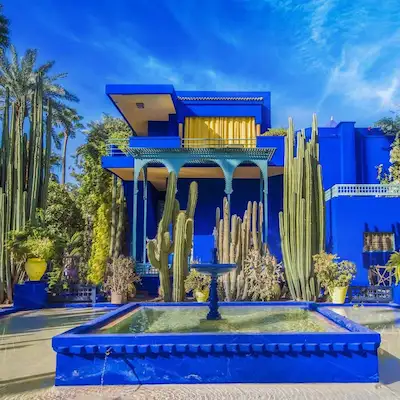
The most famous garden in Morocco, and deservedly so. The French painter Jacques Majorelle spent forty years building it from the 1920s, painting the villa and pergolas in an electric cobalt now trademarked as "Majorelle Blue." Yves Saint Laurent and Pierre Bergé bought and saved it in the 1980s, and YSL's ashes were scattered here. Bamboo groves, towering cacti, lily ponds and that vivid blue against terracotta make it endlessly photogenic. The same ticket complex includes the excellent Berber Museum, and the world-class YSL Museum sits next door.
- LocationGueliz, ~10 min taxi from medina
- Price~170 MAD garden; +Berber Museum
- Duration1–1.5 hours
- Best time8 AM opening
- Best forPhotographers, design lovers
Local tip: Book your timed ticket online the night before and arrive for opening. It is small and gets genuinely crowded — the famous blue villa shot is only peaceful in the first 30 minutes of the day.
8.Le Jardin Secret
Hidden behind an unremarkable door on the busy Rue Mouassine, this restored 19th-century riad complex is exactly what its name promises — a secret. Two walled gardens, one a classic Islamic chahar bagh divided into four by water channels, the other an exotic garden, both fed by the original khettara underground irrigation system that still works. It is calm, beautifully done and rarely crowded, and you can climb the tower for a rooftop view over the medina. A perfect mid-souk decompression stop.
- LocationRue Mouassine, central medina
- Price~80 MAD (+ tower)
- Duration45 minutes
- Best timeHot midday — it's shaded
- Best forA souk breather
Local tip: The café at the back does a good mint tea, and the tower climb is worth the few extra dirhams for a calm rooftop panorama you won't get from the street.
9.Menara Gardens
Menara is the postcard you have already seen: a vast 12th-century olive grove with a huge reflecting basin, a green-tiled pavilion, and the snow-dusted Atlas Mountains mirrored in the water on a clear day. It was built by the Almohads as an agricultural estate and water reservoir, and it is still where Marrakchi families come to picnic at the weekend. Less a "sight" than a slice of local life, it is free, spacious and especially magical near sunset.
- Location~3 km southwest of the medina
- PriceFree (pavilion ~30 MAD)
- Duration30–45 minutes
- Best timeLate afternoon, clear days
- Best forPhotos, a quiet stroll
Local tip: The Atlas reflection only appears when the air is clear — best in winter and after rain. Take a petit taxi; it is too far and too dull to walk, and there is little shade on the way.
10.ANIMA Garden by André Heller
A genuine hidden gem, 27 km outside the city on the road to Ourika. The Austrian artist André Heller created this surreal, joyful botanical garden where cacti and palms share space with bold contemporary art, Keith Haring and Picasso-inspired pieces, sudden bursts of colour, and a soundtrack drifting through the paths. The Paul Bowles café terrace has a knockout Atlas view. It takes a half-day with the drive, but it is unlike anything else near Marrakech and a lovely combine with the Ourika Valley.
- Location~27 km south, Ourika road
- Price~120 MAD (shuttle available)
- Duration2 hours + travel
- Best timeSpring bloom; morning
- Best forArt lovers, families
Local tip: Pair it with Ourika Valley on the same day out — they are on the same road, so you get a garden and a mountain river valley in one easy loop.
Food Experiences
Moroccan food is one of the great cuisines of the world, and Marrakech is the best place to eat it. From a 25-dirham bowl of snail soup to a candlelit rooftop tagine, here is how to eat well at every level.
11.Street Food on Jemaa el-Fnaa
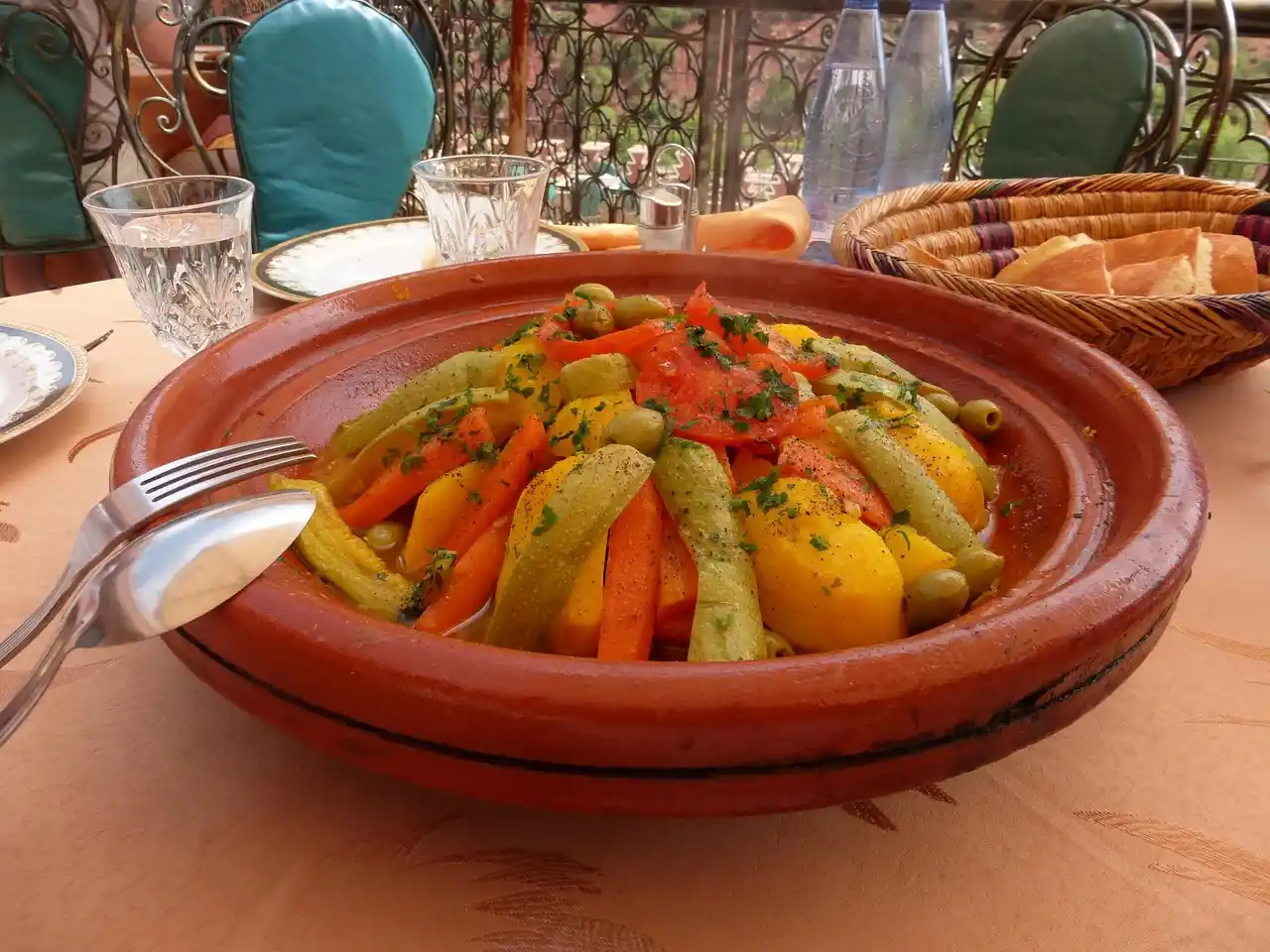
Each evening the square fills with numbered food stalls under strings of bulbs and clouds of grill smoke. This is theatre as much as dinner: skewers of lamb and merguez, fluffy couscous, harira soup, sticky msemen pancakes, and for the brave, snails in spiced broth (babbouche) and slow-cooked sheep's head. Beyond the square, seek out a mechoui stall for melting roast lamb pulled straight from an underground pit, or a hole-in-the-wall doing tanjia — the Marrakchi men's dish of meat slow-braised in a clay urn in the embers of the hammam furnace.
- LocationJemaa el-Fnaa & surrounding lanes
- Price~30–80 MAD a meal
- Duration1 hour
- Best timeFrom ~7 PM
- Best forAdventurous eaters
Local tip: Eat where there are Moroccan families, not where a tout is shouting prices in five languages. Ask the price per dish before you sit. For the full lowdown on what to order, see our Morocco Food Guide.
12.Take a Moroccan Cooking Class
The single best souvenir you can carry home. A typical half-day class starts with a guided shop through a local market to choose vegetables, herbs and spices, then moves to a riad kitchen where a dada (traditional cook) teaches you to build a tagine from the base up, roll couscous by hand, or fold the paper-thin pastry of a pastilla. You eat what you make for lunch. It demystifies the cuisine, you meet other travellers, and you finally understand why a real tagine takes two hours and tastes nothing like the versions back home.
- LocationRiads & cooking schools, medina
- Price~400–800 MAD per person
- DurationHalf day (4–5 hrs)
- Best timeMorning, with market visit
- Best forFoodies, couples, families
Local tip: Choose a class that includes the market tour — half the value is learning how to pick spices and haggle for produce. Book a day or two ahead, as the good small classes fill up.
13.Dine on a Rooftop at Sunset
Marrakech is a low city, so its rooftops are its best tables. As the call to prayer rolls across the medina and the sky turns pink behind the Koutoubia, there is nowhere better to be. The range is huge: relaxed, modern Moroccan cooking with a view over the square; romantic garden-courtyard restaurants tucked inside grand riads; or simply a mint tea and a plate of pastries on a terrace as the swifts wheel overhead. Even a modest café terrace becomes special at golden hour.
- LocationAround Jemaa el-Fnaa & the souks
- PriceTea ~30 MAD; dinner 150–400 MAD
- Duration1.5–2 hours
- Best timeArrive ~30 min before sunset
- Best forCouples, sunset views
Local tip: For sunset over the square itself, reserve a terrace table in advance and ask specifically for the front row — the good seats go first. Note many medina restaurants don't serve alcohol; check ahead if that matters to you.
Local Experiences
This is where Marrakech stops being a sightseeing list and becomes something you feel. Bathe like a local, shop like one, and watch crafts made the way they have been for centuries.
14.Sweat It Out in a Traditional Hammam
The hammam is a cornerstone of Moroccan life — part bath, part social ritual, part deep clean. The sequence is the same everywhere: you sit in a steam room until your skin softens, get lathered in fragrant black beldi soap, then scrubbed with a coarse kessa glove until you genuinely cannot believe what comes off. You leave glowing. You can go two ways: a neighbourhood public hammam (very cheap, very authentic, bring your own kit and a thick skin) or a spa hammam in a riad (calm, private, with massage and argan oil). Both are wonderful; they are just different worlds.
- LocationThroughout the medina
- PricePublic ~50–150 MAD; spa 400–1,000 MAD
- Duration1–2 hours
- Best timeHot afternoon or pre-dinner
- Best forEveryone (single-sex sessions)
Local tip: If it is your first time, start with a mid-range spa hammam to learn the ritual, then try a public one for the real, unvarnished version. Public hammams have separate hours or rooms for men and women — ask your riad for the timetable.
15.Get Lost in the Souks
The medina's covered markets are a labyrinth, and getting lost in them is the point. Each souk historically specialised in one trade and many still do: Souk Semmarine for textiles and souvenirs, Souk Cherratine for leather, the Souk des Teinturiers where wool hangs dripping in jewel colours, the metalworkers hammering lanterns, the spice and apothecary stalls of Rahba Kedima. The light filters through slatted roofs in golden bars, mopeds thread impossibly through the crowds, and every turn smells different — cedar, mint, leather, cumin. Buy nothing or buy everything; just give yourself a couple of unhurried hours.
- LocationNorth of Jemaa el-Fnaa
- PriceFree to wander; haggle to buy
- Duration2–3 hours
- Best timeMid-morning, when shops open
- Best forShoppers, photographers
Local tip: Drop a pin on your riad in Google Maps before you dive in — it works surprisingly well even in the covered lanes. Ignore anyone who tells you "the souk is closed today" or "the tannery is this way"; it is a classic detour to a shop that pays commission.
16.Watch Artisans at Work
Marrakech is a living craft city, and seeing things made changes how you value them. In the souk des forgerons you can watch lanterns punched and soldered by hand; in tiny cubbyholes, babouche slippers are cut and stitched; carpenters turn cedar on bow-lathes using their feet; and women knot rugs that take months. For a fixed-price, hassle-free introduction, the government-run Ensemble Artisanal on Avenue Mohammed V gathers reputable craftspeople under one roof — a great place to learn fair prices before you bargain in the souks. The leather tanneries in the Bab Debbagh quarter are another raw, centuries-old spectacle.
- LocationSouks; Ensemble Artisanal, Gueliz edge
- PriceFree to watch
- Duration1–2 hours
- Best timeWorking hours, mid-morning
- Best forCraft & design lovers
Local tip: If someone hands you a sprig of mint and walks you to the tanneries "for free," there is a tip expected and a hard sell at the end. You can visit independently — just follow your nose and be ready to politely decline a guide.
17.The Mellah & Rahba Kedima Spice Square
For a slower, more local wander, head to the Mellah — Marrakech's historic Jewish quarter near the palaces, with its restored synagogue, the lively covered market and balconied houses unlike anywhere else in the medina. Just north sits Rahba Kedima, the old spice and apothecary square: pyramids of cumin and paprika, baskets of dried rosebuds, live chameleons, and herbalists selling everything from saffron to slightly dubious "Berber Viagra." It is one of the most photogenic and least aggressive corners of the souk world, ringed by carpet shops with rooftop terraces overlooking the action.
- LocationSouth medina (Mellah); central souks (Rahba)
- PriceFree
- Duration1 hour
- Best timeMorning, for the spice light
- Best forPhotographers, slow explorers
Local tip: Climb to one of the carpet-shop terraces on Rahba Kedima for a mint tea and a top-down photo of the spice square — they will happily let you up hoping you'll browse, and there is no obligation to buy.
Day Trips from Marrakech
Marrakech's location is a gift: in under three hours you can be among snowy peaks, on a wild Atlantic beach, beside Morocco's tallest waterfalls, or watching the sun set over the desert. If you have three days, give one to a trip out.
18.Ourika Valley
The easiest mountain escape — a green river valley winding up into the High Atlas, just over an hour from the city. The road follows the Ourika river past Berber villages, roadside fruit stalls and riverside cafés where tables sit literally in the stream. At the head of the valley, the village of Setti Fatma is the trailhead for a walk to a series of seven waterfalls (the first is an easy 30–40 minute scramble; the rest get steeper). On a hot Marrakech day, the cool air and running water feel like another country.
- Location~65 km south, ~1.5 hrs
- Price~300–600 MAD by transport
- DurationHalf to full day
- Best timeSpring (green & flowing)
- Best forFamilies, light hikers
Local tip: The waterfall path has self-appointed "guides" and slippery rocks — wear proper shoes and agree any guiding fee up front. Combine the valley with ANIMA Garden, which is on the same road.
19.The Atlas Mountains & Berber Villages
This is my home, so I am biased — but the High Atlas is the trip I most want visitors to take. An hour from the city you reach the Imlil valley, gateway to Toubkal (North Africa's highest peak), where walnut and cherry terraces climb steep slopes and traditional stone-and-mud villages cling to the hillsides. You can do a gentle two-hour walk between hamlets, share mint tea and a tagine in a Berber home, ride a mule to a viewpoint, or just breathe air that smells of thyme and woodsmoke. It is the perfect antidote to the intensity of the medina.
- LocationImlil, ~65 km / ~1.5 hrs
- Price~400–800 MAD day trip
- DurationFull day
- Best timeSpring & autumn; snow in winter
- Best forWalkers, culture, fresh air
Local tip: Lunch in a village home, not a roadside tourist restaurant — it costs the same and the money stays with a local family. Our full Atlas Mountains day trip guide covers routes and villages in detail.
20.Essaouira on the Coast
Trade the heat for Atlantic wind. Essaouira is a beautiful, breezy fortified port town two and a half hours west — blue-shuttered whitewashed houses, ramparts pounded by surf, screeching seagulls, and a relaxed, artsy, almost-hippie air (Hendrix, Dylan and Orson Welles all passed through). Eat grilled sardines straight off the boats at the harbour, wander the easy, low-pressure medina, watch the wind-and-kitesurfers on the wide beach, and detour on the road back to see goats improbably perched in argan trees. It is a genuine change of pace from Marrakech.
- Location~190 km west, ~2.5 hrs
- Price~400–600 MAD day trip
- DurationLong full day
- Best timeYear-round (always cooler, windy)
- Best forBeach lovers, slow travel
Local tip: It is a long day as a round trip — if you can spare a night, Essaouira is even better in the early morning and evening once the day-trippers leave. See our Essaouira day trip guide.
21.Ouzoud Waterfalls
At 110 metres, the Cascades d'Ouzoud are Morocco's most spectacular waterfalls — a triple cascade thundering into a green gorge, often crowned by a rainbow in the spray. A shaded path of olive groves and little café-terraces switchbacks down to the base, where small boats ferry you close to the falls. Wild Barbary macaques live in the trees around the top (don't feed them), and you can swim in the pools below on a hot day. It is about two and a half hours each way, so it is a committed day out, but a memorable one.
- Location~150 km northeast, ~2.5 hrs
- Price~400–700 MAD with transport
- DurationFull day
- Best timeSpring for full flow
- Best forNature lovers, families
Local tip: Walk down to the base for the best views and the boats, then climb back up for a long lunch on a terrace overlooking the falls. Keep bags zipped — the monkeys are quick.
22.Agafay Desert at Sunset
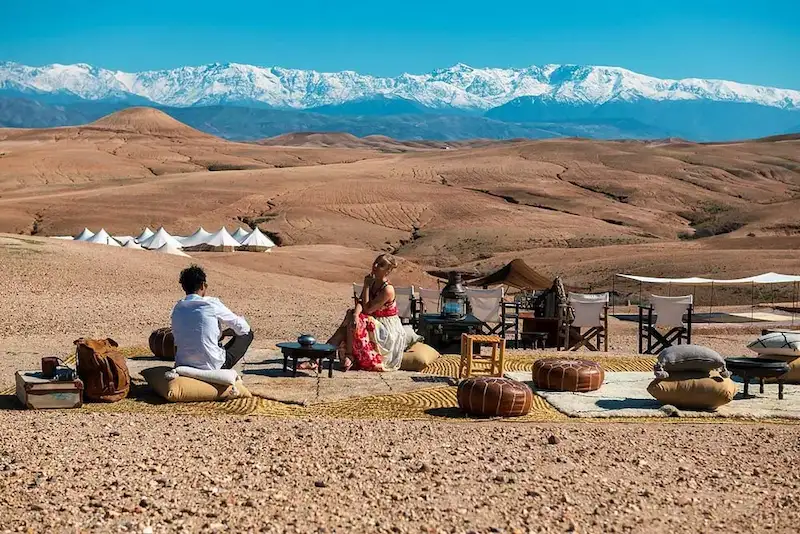
You do not need to drive ten hours to the Sahara to get a desert evening. The Agafay is a rolling, lunar landscape of bare stone hills just 40 minutes from Marrakech, with the snow-capped Atlas as a backdrop. The classic plan is a late-afternoon trip: a short camel or quad ride across the hills, sunset drinks as the light goes golden then violet, and a candlelit dinner with Berber drumming under a sky thick with stars at a desert camp. It is not the towering dunes of Merzouga — it is rocky, not sandy — but for sheer ease and a magical evening, nothing near the city beats it.
- Location~30 km southwest, ~40 min
- PriceFrom ~500–700 MAD with dinner
- DurationHalf day / evening
- Best timeLate afternoon into night
- Best forCouples, families, short trips
Local tip: Wondering whether to do Agafay or commit to the real Sahara? Our Agafay vs Sahara comparison breaks down which is right for your trip length and budget.
Adventure Activities
For the days you want adrenaline or a bucket-list moment, Marrakech delivers — from a sunset camel ride to floating over the palm groves at dawn.
23.Sunset Camel Ride in the Palmeraie
You don't have to leave the city limits for a camel ride. The Palmeraie, a vast oasis of date palms on Marrakech's northern edge, is laced with trails where you can ride a dromedary in a Berber-style headscarf as the sun drops. It is gentle, family-friendly and quintessentially Moroccan, usually finishing with mint tea in a Berber tent. For a more dramatic backdrop, the same ride is offered out in the Agafay desert with the Atlas behind you.
- LocationPalmeraie (north) or Agafay
- Price~200–400 MAD (1–2 hrs)
- Duration1–2 hours
- Best timeLate afternoon / sunset
- Best forFamilies, first-timers
Local tip: Wear long trousers (camel hair and saddles chafe) and agree the exact length and price before you mount. A reputable operator gives a proper guided loop, not a five-minute photo op.
24.Quad Biking in the Palmeraie or Agafay
For something faster, hire a quad bike (ATV) and tear across the rocky tracks, dry riverbeds and palm groves around the city. The Palmeraie route mixes oasis trails with little Berber hamlets; the Agafay route is wilder and more lunar, with bigger climbs and Atlas views. No experience is needed — a quick briefing and you are off with a lead guide. It is dusty, grin-inducing fun and pairs perfectly with a sunset and dinner in Agafay.
- LocationPalmeraie or Agafay desert
- Price~400–600 MAD (2 hrs)
- Duration2 hours
- Best timeMorning or late afternoon
- Best forThrill-seekers, groups
Local tip: Bring a buff or scarf for the dust and sunglasses you don't mind getting dirty. Check the operator provides helmets and a brief, and confirm whether you ride solo or share.
25.Hot-Air Balloon at Sunrise
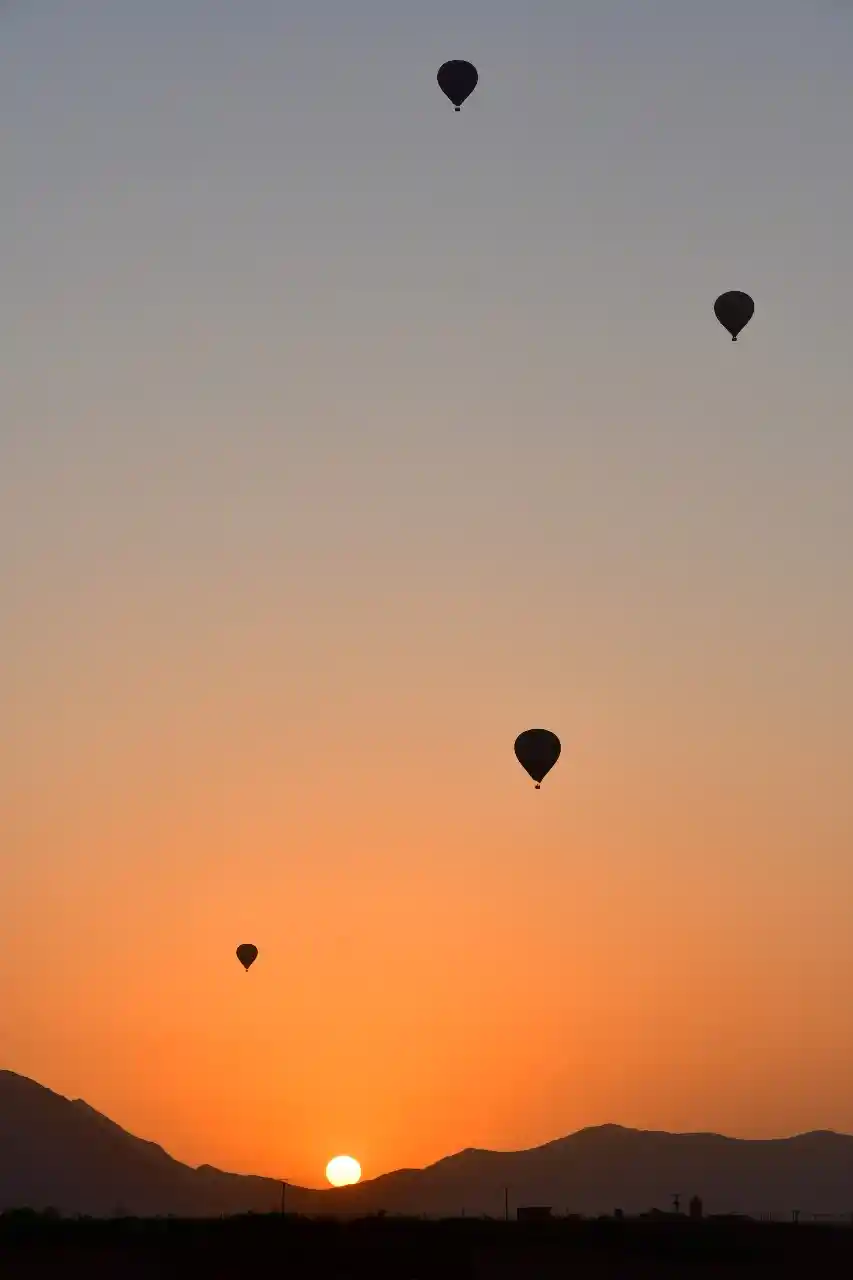
The bucket-list splurge. Before dawn you are driven out to the flat plains north of the city, watch the envelopes inflate in the half-light, and lift off just as the sun breaks over the Atlas. From the basket you drift in near-silence over palm groves, Berber villages, kasbahs and the red plains, with the mountains glowing on the horizon. Most flights end with a Berber breakfast or brunch, and many include a camel ride or village visit. It is expensive, but few experiences give you Morocco from this angle.
- LocationPlains north of Marrakech
- Price~1,800–2,500 MAD per person
- DurationHalf day (early start)
- Best timeSunrise; book 2–3 days ahead
- Best forSpecial occasions, photographers
Local tip: Flights are weather-dependent and depart very early (pick-up around 5–6 AM). Dress in layers — it is cold at dawn and warm by the time you land — and book a window that isn't your last morning, in case it gets postponed.
How to Plan It: 1, 2 & 3-Day Itineraries
Here is how I would actually string these together depending on how long you have. All three keep mornings for sights, the hot afternoons for shade, and evenings for the square.
1 Day The essentials in a single, full day
- Morning: Start at Ben Youssef Madrasa right at opening, then wander the souks down towards Rahba Kedima spice square.
- Midday: Mint tea on a terrace, then south to Bahia Palace and the Saadian Tombs (both close together).
- Afternoon: Cool off with a hammam, or escape the heat in Le Jardin Secret.
- Evening: Jemaa el-Fnaa for street food and the dusk spectacle, finished with a rooftop drink as the Koutoubia lights up.
2 Days The city, properly
- Day 1: Follow the one-day plan above, unhurried.
- Day 2 morning: Taxi to Jardin Majorelle at opening, then the YSL Museum next door.
- Day 2 afternoon: Explore Gueliz cafés and galleries, or visit El Badi Palace and climb the ramparts for the view; watch artisans at the Ensemble Artisanal.
- Day 2 evening: A Moroccan cooking class dinner, or a long rooftop dinner over the medina.
3 Days City + one day trip (my recommendation)
- Days 1–2: The two-day plan above.
- Day 3: Get out of the city — the Atlas Mountains for fresh air and Berber villages, the Agafay desert for a sunset and dinner under the stars, or Ourika Valley if you want greenery and an easy waterfall walk.
- Got more time? Add a full day to Essaouira or Ouzoud, or a sunrise balloon flight, and slow the whole thing down.
One scheduling note that saves a lot of frustration: book your day trip and any balloon flight for the middle of your stay, not the last morning. Weather, traffic and the occasional postponement happen, and you want a buffer. Keep your final morning free for last souvenirs and a relaxed departure — and pre-book your airport transfer so you are not haggling with a taxi when you are tired and watching the clock.
Local Expert Advice
A few honest words from someone who lives here. None of this should scare you off — Marrakech is welcoming and overwhelmingly safe. But knowing these things will make your visit smoother and let you enjoy the city with your guard at the right level, not too high and not too low.
Avoiding fake guides
Unofficial "guides" hang around the square and souk entrances. The classic lines are "this way is closed," "the souk/tannery is over here," or "there's a Berber market today only." They walk you to shops that pay them commission, then expect a tip. A real licensed guide carries an official badge and is booked through your riad or a reputable agency. The polite, effective response to the rest is a smile, "la, shukran" (no, thank you), and keep walking.
How to bargain (without stress)
Haggling is normal and expected in the souks — but it should be friendly, not a battle. Decide what the item is worth to you first. A common opening is to counter at roughly 40–50% of the first price and meet somewhere in the middle. Walk away cheerfully if it's not right; you'll often be called back. Never start bargaining for something you won't buy. And remember fixed-price shops (and the Ensemble Artisanal) exist if haggling isn't your thing.
Best sunrise & sunset spots
Sunrise: the medina is magical and empty just after dawn — walk to a quiet Jemaa el-Fnaa or up to your riad's rooftop. Sunset: a café terrace on the edge of the square as the Koutoubia lights up; the El Badi ramparts; the Menara basin with the Atlas behind; or, best of all, the open horizon of the Agafay desert.
Best photography locations
Ben Youssef Madrasa's courtyard, the blue villa at Majorelle (first thing), the dyers' souk with hanging wool, Rahba Kedima from a carpet-shop terrace, the Saadian Tombs ceilings, and the rooftops over Jemaa el-Fnaa at dusk. Golden hour light on the red walls is unbeatable. Always ask before photographing people, especially women and stallholders — a smile and a few dirhams smooth the way.
Areas & times to be careful
Marrakech is safe day and night in the busy areas, but the medina's quiet back-lanes can be confusingly dark and empty late at night — stick to lit, populated routes after dinner, or take a petit taxi to the nearest medina gate. Jemaa el-Fnaa and the crowded souks are pickpocket territory simply because of the crush; a zipped, front-worn bag solves it.
Money & tipping
Carry small dirham notes (20s and 50s) — taxis, stalls and tips all run on cash, and nobody has change for a 200. Tipping (baksheesh) of a few dirhams is normal for small services. Agree taxi fares before you get in (petit taxis are cheap; insist on the meter or settle a price). See our tipping guide for the specifics.
A note on respect
Marrakech is a living Muslim city, not a theme park. Dress modestly in the medina (shoulders and knees covered helps, especially for women), ask before photographing people, and learn three words — salam (hello), shukran (thank you), la shukran (no thank you). They open doors and turn hassle into warmth. For more, read our Moroccan culture & etiquette guide.
Common Tourist Mistakes
The things I see visitors get wrong again and again — easily avoided once you know.
- Trying to see everything in one day. Marrakech rewards a slow pace. Three or four sights done well beats ten done in a sweaty blur.
- Sightseeing through the midday heat. From May to September the early afternoon is brutal. Locals retreat indoors — you should too. Front-load your mornings.
- Not carrying small cash. Cards are useless in the souks and for taxis. Always have 20 and 50 dirham notes; ATMs run out at weekends.
- Accepting "help" with directions. Unsolicited guidance almost always ends in a shop or a demand for money. Use your phone's map and decline politely.
- Taking the first price — or refusing to bargain at all. The opening price in the souk is theatre. Equally, don't haggle aggressively over a few dirhams; it's about fairness, not winning.
- Not agreeing taxi fares in advance. Settle the price or insist on the meter before you get in, or you'll "negotiate" at the destination.
- Booking the desert or balloon for the last morning. Weather and delays happen. Leave a buffer day before your flight.
- Dressing for a beach resort. It's a conservative city. Light, covering clothes keep you cooler and draw far less attention, especially for women.
- Drinking tap water. Stick to bottled or filtered water to avoid an upset stomach derailing your trip.
- Underestimating day-trip distances. Essaouira and Ouzoud are 2.5 hours each way. Lovely, but a full commitment — not a quick afternoon out.
Marrakech in pictures


Frequently Asked Questions
Is 3 days enough in Marrakech?
Three days is the sweet spot. Day one covers the medina, souks and Jemaa el-Fnaa; day two the palaces, Majorelle Garden and a hammam; day three a day trip to the Agafay desert, the Atlas Mountains, Ourika Valley or Essaouira. Two days is enough for the city highlights only. Five days lets you slow right down and add a second excursion.
Is Marrakech walkable?
The medina is entirely walkable and largely pedestrian — most historic sights are within a 20-minute stroll of Jemaa el-Fnaa. Wear closed, comfortable shoes for the uneven lanes. For the modern Gueliz district, Majorelle Garden and Menara, grab a petit taxi (20–50 MAD) as they sit 2–4 km out.
Is Marrakech expensive?
No — it's inexpensive by European or North American standards. A street-food dinner runs 40–80 MAD, monument entry is 70–100 MAD, a mid-range riad is 600–1,200 MAD a night, and a petit taxi across town is 20–50 MAD. You can see the city well on 400–600 MAD a day, or live comfortably on around 1,200. See our Morocco budget guide for full numbers.
What should I not miss in Marrakech?
Don't miss Jemaa el-Fnaa at dusk, Bahia Palace, the Saadian Tombs, Ben Youssef Madrasa, Majorelle Garden, getting pleasantly lost in the souks, a traditional hammam, a rooftop dinner at sunset, and at least one day trip — the Agafay desert or the Atlas Mountains are the easiest.
Is Marrakech safe for tourists?
Yes. Violent crime against visitors is rare. The real issues are petty scams, pushy faux guides and pickpockets in crowded souks. Keep valuables zipped away, agree taxi and shopping prices before you commit, and politely decline unsolicited "help." Our Morocco safety guide goes deeper.
What's the best time of year to visit Marrakech?
Spring (March–May) and autumn (September–November) are ideal — warm, clear and comfortable for walking. Summer (June–August) is very hot, often over 40°C, so plan around the heat. Winter is mild and sunny by day but cold at night, with snow on the Atlas as a backdrop. See our seasonal guide.
Do I need a guide for Marrakech?
Not for the city — the medina is small and most sights are self-explanatory. A good licensed guide can add a lot for a souk orientation or the historic monuments, but book one through your riad or a reputable agency, never from a tout in the street. For day trips into the mountains or desert, a driver-guide is genuinely worth it.
Where should I stay in Marrakech?
Stay in a traditional riad inside the medina to be walking distance from everything, or in Gueliz/Hivernage for modern hotels, pools and easier taxi access. Riads are the quintessential Marrakech experience — quiet courtyards behind plain doors. Our best riads guide breaks it down by budget and area.